
Status: Ongoing
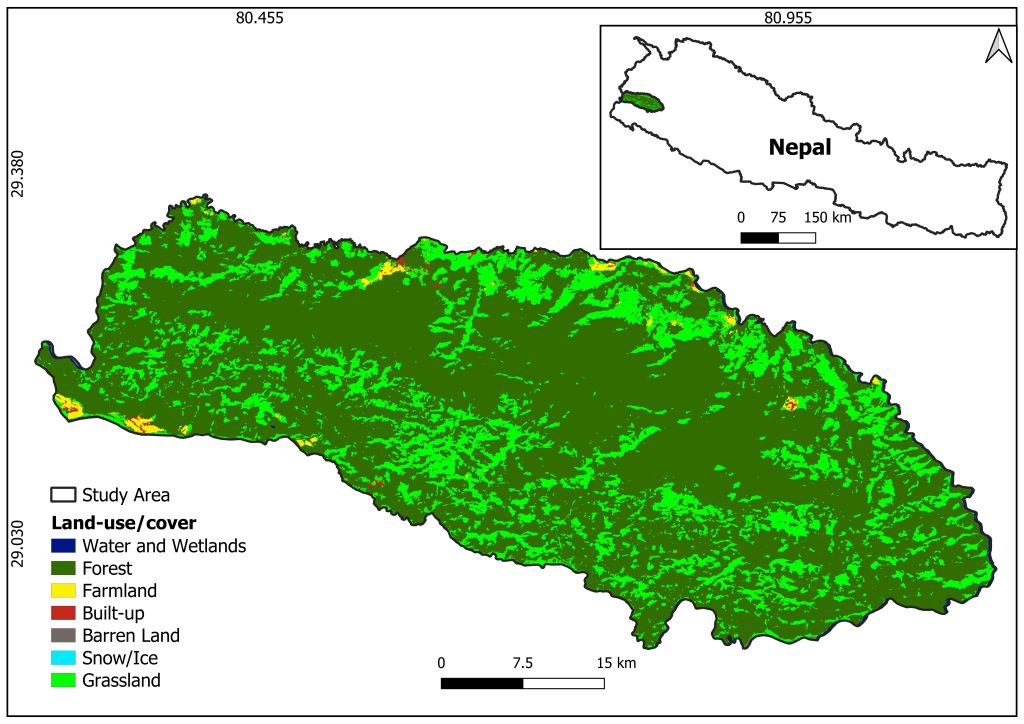
This project explores the intensity, distribution, and drivers of human–wildlife conflict (HWC) across the Mahakali–Seti Forest Landscape (MSFL), covering 10 municipalities of Dadeldhura and Doti districts. The mid-hill region is a mosaic of community forests, agricultural land, and grazing zones where people and wildlife frequently overlap, yet scientific information on conflict patterns here remains extremely limited.
Using household surveys, GPS-based incident mapping, socio-economic data, and ecological variables, the study documents crop damage, livestock depredation, property loss, and human attacks caused by species such as Himalayan black bear, wild boar, monkey, and leopard. Spatially explicit models will identify hotspots of HWC and predict how conflict patterns might shift with changing land use and climate. The project also evaluates the cost-effectiveness of existing mitigation strategies and assesses local perceptions, tolerance, and coping mechanisms.
By integrating ecological, social, and spatial datasets, this study provides the first landscape-level understanding of HWC in the Far-Western mid-hills. Results will support community forests, local governments, and conservation agencies in designing targeted interventions that reduce economic losses, strengthen coexistence, and reinforce sustainable human–wildlife relationships in this understudied region.